FIRST DAY OF PRESCHOOL: How to Prepare for Preschool?
Preschool education is extremely important for a child’s development, as this is the stage at which a child lays the foundation for future learning.
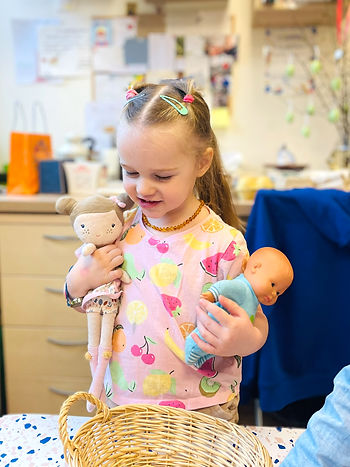
Preschool-aged children have an innate curiosity about the world, a desire to explore, interact, and form relationships with others—especially adults, who are like superheroes to them!
So many questions, and even more uncertainty.
What’s the best age to start sending a child to preschool?
How can a family prepare for this change and help their child adjust?
How can you make the adjustment easier, and how long does it usually take?
How can parents choose the best preschool for their child?
Preschool is the first step on the path to a child’s independence. It serves as a bridge between the family and school, for which the preschool prepares the child. Socialization and early learning provide the foundation for life skills that influence subsequent stages of development.
To one family, a preschool may seem ideal; to another, it may seem ordinary and unremarkable. It depends on what parents expect from a preschool. Some prefer a preschool with strict rules, while others prefer a democratic, free atmosphere that encourages a child’s creativity, activity, and independence. When preparing to send your child to preschool, the first step is to answer an important question: what kind of preschool would be best for your child, and what are your family’s expectations?
The next step is to gather information about the preschool from as many different sources as possible. It’s always a good idea to talk to parents whose children attend or have attended that preschool. Many preschools already have websites where you can learn about the preschool’s traditions, educational program, and additional services provided to children and families (such as a psychologist, special education teacher, or other specialists), language classes, and extracurricular activities like drama, art, music, or other clubs, check the staff’s qualifications, and learn more about the inner workings of the preschool.
A kindergarten or nursery school is, first and foremost, an educational institution where children are not only cared for but also educated according to specific programs. Therefore, when choosing a kindergarten, it is very important to find out what educational program is implemented there.
Don't hesitate to visit the preschool, take a look around the facilities, and meet the teachers. The more information you gather, the easier it will be to make a decision and choose the best place for your little one.

Is there a right time to send a child to preschool?
It is important to note that it is not only the children who are preparing for preschool, but their parents as well. If parents are afraid or anxious, the child will pick up on these feelings, because the more anxious the parents are, the harder it will be for the child to adjust to preschool.
Children who cannot yet speak or read are highly receptive to their parents’ emotions and sensitive to nonverbal communication—in other words, they immediately sense their parents’ anxiety.
The most important thing is to trust the specialists to care for your child professionally and appropriately; therefore, the first step on this smooth journey is the parents’ ability to let go of their child.
A child is ready for preschool when the parents see that he or she is ready. It is impossible to pinpoint the exact time when a child should start attending preschool—parents are the ones who can best see and sense this.
How can you help your child get ready for preschool?
There is no one-size-fits-all approach for all children to make adjusting to preschool easier and separating from their parents less difficult. Starting preschool and leaving home is an important step in a child’s life, so at this moment, the best thing we can do is to make this change as smooth as possible so that the child can accept it more calmly.
Before you start attending, come visit us
It’s a great help for a child to be introduced to their future environment—in other words, it’s best to visit the preschool in advance and see the spaces and rooms so that the little one knows what to expect and where their locker, classroom, or restroom is.
That way, they’ll feel safer on their first day at preschool because they’ll already be familiar with the place.
A similar daily routine
Gradually adjust your child’s daily routine at home to match the preschool’s schedule before they start attending preschool: your child’s daily rhythm should begin to align with the rhythm established at preschool—this will reduce your child’s anxiety and stress.
If your child takes two naps, help them adjust to a single nap schedule (12:00–15:30). It’s important that the rules are consistent. The daycare staff can tell you about life in the daycare group and the daily routine. Talk to your child about their upcoming daily schedule at preschool (or better yet, create a visual schedule and hang it in a visible spot at home) so they know what to expect.

A calm, structured start to the day
A calm and structured start to the day is important for a smooth transition. A chaotic morning routine and rushing the child to get ready can cause significant frustration, making it harder for the child to say goodbye to their parents and enter the preschool.
Decide who will take the child to preschool?
It is recommended that, during the first few weeks, the parent who is better able to respond calmly to the child’s tears and remain calm in the child’s presence be the one to take the child to preschool.
In a stressful situation, a father’s or mother’s calmness, firm yet loving guidance, caring emotional understanding, and support create a sense of security and the belief that nothing is threatening the child.
A Positive Attitude
Talk positively about preschool by saying things out loud to your child, such as: “You’re going to learn so many different things today! Wow, I heard you’re going to be finger painting today! The other kids and your teacher really missed you over the weekend!”
Parents’ negative attitude toward their child can make it difficult for the child to adjust and reinforce their reluctance to go to preschool.
Statements such as, “You’ll be very sad here, but I’ll be back soon,” or “Was it really that bad?” are directive in nature, so the child will begin to mimic your attitude and expectations. Later on, they will start to feel insecure at preschool.
If there are certain issues that concern you, you have the right to discuss them with the appropriate staff members at the educational institution; however, it is recommended that your child not overhear these discussions.
Farewell Ritual
The longer the goodbye takes, the more the child will cry, and the harder it will be to help them return to a state of emotional calm. Prolonged negotiations at the classroom door only make the situation even more painful for both the parents and the child. When the goodbye is brief, the child sometimes doesn’t even have time to get very upset: once the door closes, the tears last no more than a few minutes, and the teachers redirect the child’s attention to an activity they enjoy.
You can create a goodbye ritual. It could be a kiss, a certain hand gesture, waving out the window, or something similar.
Such goodbye rituals give meaning to this important moment and help your child reduce the stress of separation.
Crying is also part of the goodbye ritual, and it’s normal—let’s allow our child to cry a little to help relieve the tension.
Don’t promise (or buy) your child gifts or sweets just for staying at preschool. Going to preschool is part of your child’s life, not a service you’re paying for.
Also, use play to simulate future daily routines: drive (even if just for a short while) to the preschool grounds, talk about the surroundings as you drive by, spend 15–30 minutes in the future environment from time to time, and pack the most essential items into a backpack (a water bottle, a toy, etc.)
Don't have any preconceived notions
Some believe that their child is very sociable and will immediately make friends with other children. In such cases, parents are unprepared for their child’s tears and resistance, and are startled by such a reaction.
Others, on the contrary, believe that their child is very sensitive, that it will be very difficult for them, and they begin to feel sorry for their child and overprotect them even before the child starts school. Preconceived notions sometimes prevent parents from seeing how their child is truly feeling.
Familiar Objects
Familiar objects are items that remind the child of home.
During the adjustment period, you can place a family photo, a toy, or a favorite book in your child’s locker.
Familiar objects can help if your little one feels lonely during the day.

“The child needs to know what preschool is, what the other children do there, what he will be doing, and when he will arrive and leave. An equally important aspect of ensuring the child’s smooth integration into preschool is keeping promises. The child needs to know when their parents will come to pick them up—in this case, you must not lie.”
Younger children don’t know how to tell time, so you should list everything step by step, for example: “You’ll eat, play with the other kids, spend some time outside, eat again, take a nap, and when you wake up, I’ll be there.” If we’ve promised to arrive as soon as the child wakes up, we mustn’t be late—otherwise, it creates a sense of insecurity and erodes trust in their parents.
- Monika, Head of the PARKO Branch
KARTU MAŽAIS ŽINGSNELIAIS SIEKIAME DIDELIŲ SVAJONIŲ!



Comments